
In This Article
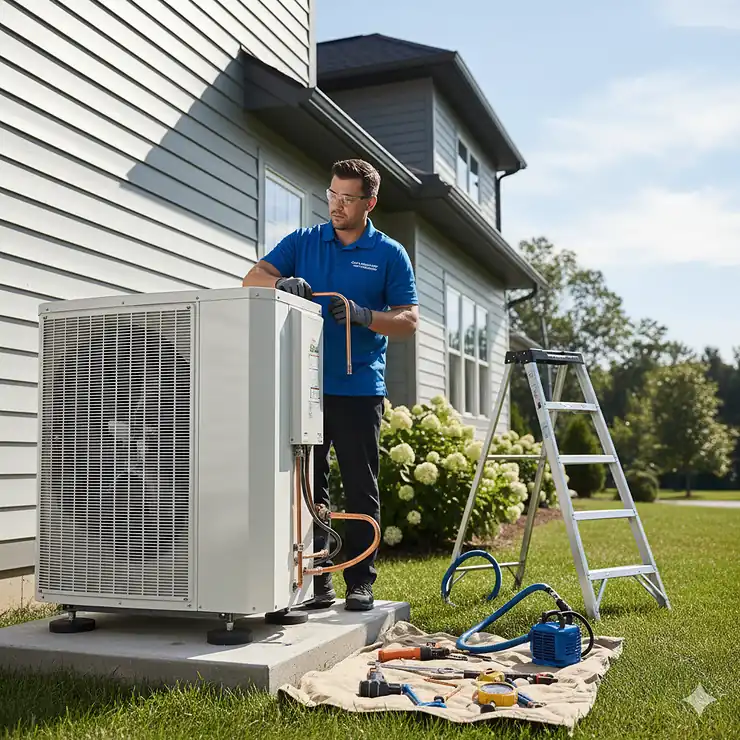
When summer temperatures soar, finding the right 3.0 ton air conditioner becomes essential for maintaining comfortable indoor temperatures. Whether you’re replacing an old unit or installing a new cooling system, understanding the intricacies of 3 ton air conditioner systems can save you thousands of dollars while ensuring optimal comfort for years to come.
The perfect 3.0 ton air conditioner balances cooling capacity, energy efficiency, and long-term reliability. With cooling demands increasing and energy costs rising, choosing the best 3 ton central air conditioner requires careful consideration of SEER ratings, installation requirements, and overall value proposition. Let me guide you through everything you need to know about these powerful cooling systems.
✨Was this helpful? Spread the word! 🚀
Understanding 3.0 Ton Air Conditioner Basics 🌡️
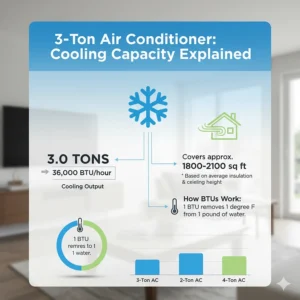
A 3.0 ton air conditioner provides 36,000 BTU (British Thermal Units) of cooling capacity per hour, making it ideal for homes ranging from 1,500 to 2,100 square feet. The “ton” measurement doesn’t refer to weight but rather the amount of heat the unit can remove from your home in one hour.
Key Specifications to Consider ✅
When evaluating any 3 ton air conditioner, several critical specifications determine performance and efficiency:
Cooling Capacity and Coverage:
- Standard 36,000 BTU cooling output
- Optimal for 1,500-2,100 square feet
- Variable speed options for precise temperature control
- Humidity removal capabilities for enhanced comfort
Energy Efficiency Ratings:
- SEER2 ratings typically range from 13.4 to 20+
- Higher SEER ratings translate to lower operating costs
- Energy Star certification for maximum efficiency
- Annual operating cost calculations based on local utility rates
Installation Requirements:
- Professional installation recommended for most units
- Electrical requirements: typically 240V service
- Adequate clearance for condenser placement
- Ductwork compatibility and modifications
Understanding these fundamentals helps you make informed decisions when comparing different models and brands in the competitive 3.0 ton air conditioner market.
Top 7 Best 3.0 Ton Air Conditioner Units in 2025 🏆
After extensive research and analysis of current market offerings, here are the seven best 3.0 ton air conditioner units available today:
1. Senville 3 Ton Central Air Conditioner Heat Pump Split System ⭐
The Senville 3 Ton Central Air Conditioner Heat Pump Split System stands out as a premium choice with its 36,000 BTU capacity and innovative inverter technology. This system features variable speed operation and built-in dehumidification modes.
Key Features:
- 36,000 BTU cooling capacity
- Inverter technology for enhanced efficiency
- Multi-speed fan controls with turbo mode
- Built-in dehumidification system
- 208/230V operation
- Professional installation required
Price Range: $2,800 – $3,500 Warranty: 10-year limited parts warranty Best For: Homeowners seeking premium features and energy efficiency
2. Goodman 3 TON 13.4 SEER2 Horizontal AC Packaged Unit (GPCH33631)
The Goodman GPCH33631 offers excellent value for manufactured homes and horizontal installations. This packaged unit combines reliability with affordable pricing, making it perfect for budget-conscious homeowners.
Key Features:
- 13.4 SEER2 energy efficiency rating
- Horizontal discharge design
- All-aluminum evaporator coil
- Multi-speed ECM blower motor
- Fully charged and tested
- Energy-efficient scroll compressor
Price Range: $2,200 – $2,800 Warranty: 10-year limited warranty Best For: Mobile homes and horizontal installation requirements
3. Goodman 3 Ton 14.5 SEER2 R-32 Air Conditioner (GLXS4BA3610)
The Goodman GLXS4BA3610 represents excellent mid-range performance with modern R-32 refrigerant technology. This split system offers reliable cooling with improved environmental efficiency.
Key Features:
- 14.5 SEER2 efficiency rating
- R-32 refrigerant for environmental compliance
- Single-stage cooling operation
- Service valves and gauge ports included
- Pre-charged for 15-foot line sets
- AHRI certified performance
Price Range: $2,400 – $3,100 Warranty: 10-year parts warranty with registration Best For: Standard residential applications seeking reliable performance
4. MrCool Universal 3 Ton 20 SEER Central Heat Pump System
The MrCool Universal 3 Ton System features cutting-edge DC inverter technology and exceptional energy efficiency. This system can be field-converted between 2-3 ton capacity.
Key Features:
- 20 SEER energy efficiency
- DC inverter compressor technology
- Field-convertible capacity (2-3 tons)
- Slim condenser design
- No-Vac quick connect line sets
- Side discharge configuration
Price Range: $3,400 – $4,200 Warranty: 10-year limited warranty Best For: Energy-conscious homeowners with space constraints
5. MrCool DIY 36K BTU Split System
The MrCool DIY 36K BTU system revolutionizes installation with pre-charged line sets and quick-connect technology, making it truly DIY-friendly while maintaining professional performance standards.
Key Features:
- 36,000 BTU cooling capacity
- Pre-charged R-454B refrigerant line sets
- Quick-connect installation system
- Smart app control compatibility
- Gold Fin corrosion protection
- 7-year compressor warranty
Price Range: $3,500 – $4,000 Warranty: 7-year compressor, 5-year parts Best For: DIY enthusiasts and quick installation needs
6. Goodman 3 Ton 15.2 SEER2 Complete System
The Goodman 15.2 SEER2 Complete System offers comprehensive heating and cooling with high-efficiency ratings and complete system integration for optimal performance.
Key Features:
- 15.2 SEER2 efficiency rating
- Complete system with air handler
- Multi-position installation capability
- R-32 refrigerant technology
- 80,000 BTU heating capacity
- AHRI certified matching
Price Range: $4,500 – $5,500 Warranty: 10-year limited parts warranty Best For: Complete system replacement and new construction
7. Ruud Endeavor 3 Ton 14.3 SEER2 Air Conditioner
The Ruud Endeavor 3 Ton 14.3 SEER2 system provides reliable performance with R-454B refrigerant technology and competitive pricing for standard residential applications.
Key Features:
- 14.3 SEER2 energy efficiency
- R-454B environmentally friendly refrigerant
- Durable cabinet construction
- Standard residential sizing
- Professional installation required
- Industry-standard warranty coverage
Price Range: $2,600 – $3,300 Warranty: 10-year limited warranty Best For: Standard replacement applications and reliable performance
💰 Don’t Miss These Exclusive AC Deals!
Take your home comfort to the next level with these carefully selected 3.0 ton air conditioner systems. Click on any highlighted unit to check current pricing and availability. These systems will keep your home cool and comfortable while maximizing energy savings! ❄️⚡
Comprehensive Comparison Table 📊
| Model | SEER2 Rating | BTU Capacity | Refrigerant | Price Range | Best Application |
|---|---|---|---|---|---|
| Senville Heat Pump | Variable | 36,000 | R-410A | $2,800-$3,500 | Premium efficiency |
| Goodman GPCH33631 | 13.4 | 36,000 | R-32 | $2,200-$2,800 | Mobile homes |
| Goodman GLXS4BA3610 | 14.5 | 36,000 | R-32 | $2,400-$3,100 | Standard residential |
| MrCool Universal | 20.0 | 36,000 | R-410A | $3,400-$4,200 | High efficiency |
| MrCool DIY | 18+ | 36,000 | R-454B | $3,500-$4,000 | DIY installation |
| Goodman Complete | 15.2 | 36,000 | R-32 | $4,500-$5,500 | Complete systems |
| Ruud Endeavor | 14.3 | 36,000 | R-454B | $2,600-$3,300 | Standard replacement |
💬 Just one click – help others make better buying decisions too! 😊
Industry-Specific Applications of 3.0 Ton Air Conditioners 🏢
The versatility of 3.0 ton air conditioner systems extends far beyond residential applications. Understanding how these systems perform across different industries and environments helps you make informed decisions about capacity, features, and installation requirements.
Residential Applications and Home Comfort ✅
Most homeowners choose 3 ton air conditioner systems for single-family homes ranging from 1,500 to 2,100 square feet. However, the optimal sizing depends on several factors including ceiling height, insulation quality, window orientation, and local climate conditions.
Traditional Single-Family Homes: In standard residential applications, a 3.0 ton air conditioner typically serves homes with moderate insulation and standard 8-9 foot ceilings. These systems work exceptionally well in ranch-style homes, two-story colonials, and split-level designs where ductwork can be efficiently distributed throughout the living space.
Modern Energy-Efficient Homes: Newer construction with superior insulation, energy-efficient windows, and tight building envelopes may find a 3 ton central air conditioner provides more than adequate cooling. In fact, properly insulated homes might only require 2.5 tons, making variable-speed 3.0 ton systems ideal because they can modulate down to match actual cooling loads.
Older Homes and Retrofits: Historic homes and older construction often require the full capacity of a 3.0 ton air conditioner due to less efficient building envelopes, single-pane windows, and minimal insulation. These applications benefit from high-efficiency units with strong dehumidification capabilities to manage both temperature and humidity effectively.
Commercial and Light Industrial Uses 🏭
Small commercial spaces frequently utilize 3 ton air conditioner systems for efficient climate control. Retail stores, small offices, medical practices, and restaurants often find these units provide excellent performance for spaces up to 2,000 square feet of conditioned area.
Retail and Service Businesses: Retail establishments benefit from the consistent cooling provided by 3.0 ton systems, especially during peak customer hours when internal heat loads increase from lighting, equipment, and occupancy. The ability to maintain comfortable shopping environments directly impacts customer satisfaction and sales performance.
Professional Offices: Medical offices, law firms, and accounting practices rely on 3 ton central air conditioner systems to maintain professional environments for both staff productivity and client comfort. These applications often require precise temperature control and excellent indoor air quality.
Server Rooms and IT Applications: Small server rooms and IT closets frequently use dedicated 3.0 ton air conditioner systems for equipment cooling. These specialized applications require 24/7 operation, precise temperature control, and exceptional reliability to protect expensive electronic equipment.
Multi-Unit Residential Properties 🏘️
Apartment complexes, condominiums, and townhome developments often standardize on 3 ton air conditioner systems for individual units. This standardization simplifies maintenance, reduces parts inventory, and ensures consistent performance across multiple dwelling units.
Apartment and Condo Applications: Individual apartment units ranging from 1,200 to 1,800 square feet benefit from dedicated 3.0 ton systems. Property managers appreciate the ability to provide individual climate control while maintaining reasonable operating costs and maintenance schedules.
Townhome and Row House Installations: Townhomes and row houses present unique installation challenges due to limited outdoor space and shared walls. Compact 3 ton air conditioner designs with slim profiles and quiet operation become essential for these applications.
Specialized Climate Requirements 🌡️
Certain applications demand specialized features from 3.0 ton air conditioner systems. Museums, art galleries, wine storage facilities, and pharmaceutical applications require precise humidity control and consistent temperature maintenance.
Humidity-Sensitive Applications: Art galleries, museums, and library archives require 3 ton central air conditioner systems with enhanced dehumidification capabilities. These applications prioritize humidity control over pure cooling capacity to protect valuable collections and documents.
Temperature-Critical Storage: Wine cellars, pharmaceutical storage, and food service applications rely on 3.0 ton systems for precise temperature maintenance. Variable-speed compressors and advanced controls ensure tight temperature tolerances while minimizing energy consumption.
Manufacturing and Production: Small manufacturing facilities often utilize 3 ton air conditioner systems for climate-controlled production areas. Electronic assembly, precision machining, and quality control laboratories require stable environmental conditions for consistent product quality.
Regional and Climate Considerations 🌍
Geographic location significantly impacts 3.0 ton air conditioner performance and selection criteria. Hot, humid climates place different demands on cooling systems compared to hot, dry regions or moderate climate zones.
Hot, Humid Climates: Southern states and coastal regions require 3 ton air conditioner systems with excellent dehumidification capabilities. High humidity levels make cooling loads more challenging and require systems designed for continuous operation during peak summer months.
Hot, Dry Climates: Desert regions and southwestern states benefit from 3.0 ton systems with enhanced coil designs for dust resistance and high ambient temperature operation. These applications often require larger condensers and specialized coil treatments.
Moderate Climate Zones: Northern regions with moderate summer temperatures may find 3 ton central air conditioner systems provide excellent comfort with shorter operating seasons. These applications can focus on high-efficiency models that optimize performance during limited cooling seasons.
Advanced Technical Analysis: Engineering Excellence 🔬
Understanding the engineering principles behind 3.0 ton air conditioner systems helps you appreciate the complexity and sophistication of modern cooling technology. From thermodynamic cycles to advanced materials science, these systems represent decades of engineering innovation.
Thermodynamic Fundamentals and Heat Transfer ⚡
The heart of any 3 ton air conditioner lies in the refrigeration cycle, which leverages phase changes of refrigerant to transfer heat from indoor air to outdoor ambient conditions. This process involves four primary components working in harmony: the evaporator, compressor, condenser, and expansion device.
Evaporator Coil Design and Performance: Modern 3.0 ton systems utilize aluminum or copper evaporator coils with specialized fin designs to maximize heat transfer surface area. The relationship between fin spacing, tube diameter, and airflow velocity determines the system’s ability to remove both sensible and latent heat from indoor air.
Microchannel evaporator technology, increasingly common in high-efficiency units, provides superior heat transfer while reducing refrigerant charge requirements. These designs utilize parallel flow patterns and optimized port geometries to enhance performance while minimizing pressure drops.
Compressor Technology and Efficiency: The compressor serves as the heart of the refrigeration system, and technological advances in this component drive efficiency improvements across the entire 3 ton air conditioner category. Scroll compressors dominate the residential market due to their smooth operation, high efficiency, and excellent reliability.
Variable-speed and inverter-driven compressors represent the latest advancement in 3.0 ton technology. These systems modulate capacity from approximately 40% to 110% of rated output, matching cooling loads precisely while minimizing energy consumption and maximizing comfort.
Condenser Design and Heat Rejection: Outdoor condenser coils in 3 ton central air conditioner systems must efficiently reject the combined heat load from indoor cooling plus compressor work. Modern designs incorporate specialized coil geometries, advanced fin treatments, and optimized fan systems to maximize heat transfer in challenging outdoor conditions.
Microchannel condensers, similar to automotive radiators, provide exceptional heat transfer efficiency in compact packages. These designs resist corrosion better than traditional tube-and-fin coils while providing superior thermal performance.
Refrigerant Technology and Environmental Impact 🌱
The transition from traditional R-410A refrigerant to newer, more environmentally friendly alternatives represents a significant technological shift in 3.0 ton air conditioner design. Understanding these changes helps you select systems that meet current regulations while providing optimal performance.
R-32 Refrigerant Advantages: Many modern 3 ton air conditioner systems utilize R-32 refrigerant, which offers several advantages over traditional R-410A. R-32 provides approximately 10% better heat transfer efficiency while reducing global warming potential by roughly 68% compared to R-410A.
The lower density of R-32 allows for reduced refrigerant charge requirements, typically 20-30% less than equivalent R-410A systems. This reduction translates to lower system costs and reduced environmental impact while maintaining or improving cooling performance.
R-454B and Next-Generation Refrigerants: The newest 3.0 ton systems increasingly utilize R-454B refrigerant, which combines even lower global warming potential with excellent thermodynamic properties. These refrigerants require specialized components and system designs but offer superior environmental performance.
Advanced refrigerant management systems, including variable expansion devices and enhanced receiver designs, optimize refrigerant flow and system performance across varying operating conditions. These technologies ensure consistent performance while minimizing refrigerant leakage and environmental impact.
Electronic Controls and Smart Technology Integration 📱
Modern 3 ton central air conditioner systems incorporate sophisticated electronic controls that optimize performance, enhance comfort, and provide diagnostic capabilities. Understanding these control systems helps you appreciate the advanced features available in today’s market.
Variable Speed Drive Technology: Inverter-driven compressors utilize advanced power electronics to precisely control compressor speed and capacity. These systems employ sophisticated algorithms to match cooling output with actual load requirements, resulting in energy savings of 20-40% compared to single-speed systems.
The electronic expansion valve (EXV) technology works in conjunction with variable-speed compressors to optimize refrigerant flow continuously. These systems maintain optimal superheat and subcooling conditions across varying load and ambient conditions.
Advanced Sensor Integration: Modern 3.0 ton air conditioner systems incorporate multiple temperature, pressure, and humidity sensors throughout the refrigeration circuit. These sensors provide real-time feedback to control systems, enabling predictive maintenance alerts and optimal performance adjustments.
Wireless connectivity and smart home integration allow remote monitoring and control of system performance. Advanced diagnostic capabilities can identify potential issues before they result in system failures, reducing downtime and repair costs.
Machine Learning and Adaptive Controls: The latest generation of 3 ton air conditioner systems incorporates machine learning algorithms that adapt to usage patterns and optimize performance automatically. These systems learn occupancy schedules, weather patterns, and user preferences to minimize energy consumption while maintaining comfort.
Predictive analytics capabilities analyze system performance data to recommend maintenance schedules, identify efficiency improvements, and predict component replacement needs. This technology transforms reactive maintenance into proactive system optimization.
Material Science and Durability Engineering 🛡️
The materials used in 3.0 ton air conditioner construction directly impact system durability, efficiency, and maintenance requirements. Advanced materials science contributes to longer system life and improved performance in challenging environments.
Coil Materials and Corrosion Resistance: Aluminum coil technology dominates modern 3 ton central air conditioner designs due to superior corrosion resistance and thermal conductivity. Advanced alloy compositions and specialized surface treatments enhance durability in coastal and industrial environments.
Gold fin treatments and polymer coatings provide additional protection against corrosion while maintaining heat transfer efficiency. These treatments are particularly important in applications with exposure to salt air, industrial chemicals, or other corrosive environments.
Cabinet Construction and Weather Protection: Heavy-gauge galvanized steel cabinets with powder-coat finishes provide excellent protection against weather and physical damage. Advanced coating technologies resist UV degradation, impact damage, and corrosion while maintaining aesthetic appeal.
Composite materials and advanced polymers increasingly replace traditional metals in non-structural components. These materials offer superior corrosion resistance, lighter weight, and excellent thermal properties while reducing manufacturing costs.
Bearing and Lubrication Technology: Advanced bearing materials and lubrication systems extend component life in 3.0 ton systems. Permanently lubricated bearings eliminate maintenance requirements while providing reliable operation for decades.
Synthetic lubricants and advanced additives protect compressor components from wear while maintaining optimal viscosity across wide temperature ranges. These technologies contribute to improved reliability and extended component life.
Comprehensive Setup and Installation Guide 🔧
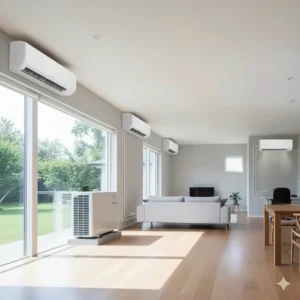
Proper installation of a 3.0 ton air conditioner system requires careful planning, professional expertise, and attention to detail. Understanding the installation process helps you prepare for the project and ensure optimal system performance.
Pre-Installation Planning and Site Assessment ✅
Before beginning any 3 ton air conditioner installation, thorough site assessment and planning ensure optimal system performance and longevity. This phase determines equipment placement, electrical requirements, and potential installation challenges.
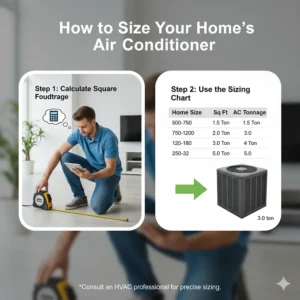
Load Calculation and System Sizing: Professional load calculations using Manual J methodology determine the actual cooling requirements for your specific application. Factors including building orientation, insulation levels, window specifications, and occupancy patterns influence the final system sizing recommendation.
Even though you’re considering a 3.0 ton system, load calculations may reveal that a 2.5 ton or 3.5 ton system better matches your specific requirements. Proper sizing ensures optimal efficiency, comfort, and equipment longevity.
Electrical System Evaluation: 3 ton central air conditioner systems typically require 240V electrical service with dedicated circuits and appropriate disconnect switches. Electrical evaluation should verify adequate service panel capacity, proper grounding systems, and compliance with local electrical codes.
Older homes may require electrical service upgrades to support modern high-efficiency equipment. Planning for these upgrades early in the process prevents delays and ensures safe, code-compliant installations.
Outdoor Unit Placement: Condenser placement significantly impacts system performance, maintenance accessibility, and noise levels. Optimal placement provides adequate clearances for airflow, service access, and future maintenance while minimizing noise impact on living areas.
Level, stable foundations prevent vibration transmission and ensure proper refrigerant return to the compressor. Concrete pads, composite platforms, or manufacturer-approved mounting systems provide appropriate support for outdoor equipment.
Ductwork Design and Modification Requirements 🌀
Existing ductwork systems may require modifications or upgrades to optimize performance with new 3.0 ton air conditioner equipment. Proper ductwork design ensures efficient airflow distribution and minimizes energy losses.
Duct Sizing and Airflow Distribution: 3 ton air conditioner systems require approximately 1,200 CFM of airflow for optimal performance. Ductwork sizing calculations using Manual D methodology determine appropriate duct dimensions for main trunks, branch runs, and individual room supplies.
Undersized ductwork restricts airflow, reducing system efficiency and comfort while increasing operating costs. Oversized ducts may cause air velocity issues and uneven temperature distribution throughout the conditioned space.
Insulation and Sealing Requirements: Ductwork insulation prevents condensation and reduces energy losses in unconditioned spaces. R-6 or R-8 insulation typically provides adequate thermal protection for most residential applications.
Proper duct sealing using mastic sealant or approved metal tapes eliminates air leakage that reduces system efficiency. Professional duct blaster testing can verify sealing effectiveness and overall system performance.
Return Air Design: Adequate return air capacity ensures proper system airflow and indoor air quality. Return air systems should provide pathways from all conditioned spaces back to the central air handler without short-circuiting supply air.
Undersized return air systems cause pressure imbalances that reduce system efficiency and comfort. Central return systems work well for most applications, while individual room returns may be necessary for complex floor plans or zoning requirements.
Refrigerant Line Installation and Testing 🧪
Refrigerant piping connects the outdoor condenser to the indoor evaporator coil, requiring precise installation techniques and thorough testing to ensure optimal performance and longevity.
Line Set Sizing and Installation: Proper refrigerant line sizing depends on system capacity, line length, and elevation differences between indoor and outdoor units. Undersized lines restrict refrigerant flow while oversized lines may cause oil return issues.
Copper tubing must be properly supported, insulated, and protected from physical damage. Insulation prevents condensation on suction lines while maintaining refrigerant temperatures for optimal system performance.
Vacuum and Leak Testing: Professional vacuum testing removes moisture and non-condensables from refrigerant circuits before system startup. Proper vacuum levels (500 microns or less) ensure refrigerant purity and prevent component damage.
Pressure testing with nitrogen verifies system integrity and identifies any leaks before refrigerant charging. Leak detection using electronic sensors or soap solutions ensures reliable, long-term system operation.
Refrigerant Charging and Commissioning: Proper refrigerant charging requires precise measurement and adjustment based on actual operating conditions. Superheat and subcooling measurements verify proper charge levels and system performance.
System commissioning includes verification of all safety controls, performance testing across operating ranges, and documentation of installation details for future reference. Proper commissioning ensures optimal performance and validates warranty requirements.
Indoor Unit Installation and Integration 🏠
Indoor air handler or evaporator coil installation requires careful attention to drainage, electrical connections, and integration with existing ductwork systems.
Air Handler Placement and Support: Indoor air handlers require adequate support, clearances for service access, and proper drainage connections. Platform installation in unconditioned spaces should include vibration isolation and weatherproofing.
Electrical connections must comply with local codes and manufacturer specifications. Control wiring between indoor and outdoor units requires proper routing and protection from damage.
Condensate Drainage Systems: Evaporator coils produce condensate that must be safely removed from the conditioned space. Primary and secondary drainage systems prevent water damage while accommodating varying humidity conditions.
Condensate pumps may be necessary for installations where gravity drainage is not feasible. Proper pump sizing and backup systems prevent overflow and water damage during peak humidity conditions.
Filter Systems and Air Quality: Filter installation and sizing impact both system performance and indoor air quality. Standard 1-inch filters provide basic protection while high-efficiency options improve air quality at the cost of increased pressure drop.
Electronic air cleaners, UV germicidal lights, and humidity control systems can be integrated with 3.0 ton air conditioner installations for enhanced indoor air quality and comfort.
Control System Integration and Programming 🎛️
Modern 3 ton central air conditioner systems offer sophisticated control options that optimize performance, enhance comfort, and provide energy savings opportunities.
Thermostat Selection and Programming: Programmable and smart thermostats unlock the efficiency potential of modern 3.0 ton systems. Multi-stage thermostats support variable-speed equipment while smart thermostats provide remote control and learning capabilities.
Proper thermostat placement away from heat sources, direct sunlight, and air drafts ensures accurate temperature sensing and optimal system performance. Professional programming optimizes comfort schedules and energy savings.
Zoning Systems and Multi-Zone Control: Zoning systems allow independent temperature control for different areas of the home using a single 3 ton air conditioner system. Motorized dampers and zone control panels manage airflow to individual zones based on temperature demands.
Proper zoning design requires careful ductwork modifications and control system integration. Variable-speed equipment works particularly well with zoning systems by modulating capacity to match varying zone loads.
Smart Home Integration: Modern 3.0 ton systems can integrate with home automation platforms for enhanced convenience and energy management. Smart thermostats, occupancy sensors, and weather integration optimize performance automatically.
Remote monitoring capabilities allow system performance tracking and diagnostic alerts through smartphone applications. These features enable proactive maintenance and troubleshooting support.
Maintenance and Longevity Optimization 🛠️
Proper maintenance extends the lifespan of 3.0 ton air conditioner systems while maintaining peak efficiency and reliability. Understanding maintenance requirements helps you budget for ongoing costs and plan maintenance schedules.
Daily and Weekly Maintenance Tasks ✅
Simple daily and weekly maintenance tasks prevent major issues while maintaining optimal system performance. These tasks require minimal time investment but provide significant benefits for system longevity and efficiency.
Air Filter Inspection and Replacement: Air filters should be inspected monthly and replaced when dirty or damaged. High-efficiency filters may require more frequent replacement due to increased dirt-holding capacity and finer filtration levels.
Dirty filters restrict airflow, reducing system efficiency and potentially causing component damage. During peak usage periods, filter replacement may be necessary every 30-45 days to maintain optimal performance.
Outdoor Unit Cleaning: Weekly visual inspection of the outdoor condenser unit identifies debris accumulation, vegetation growth, or physical damage. Leaves, grass clippings, and other debris should be removed promptly to maintain proper airflow.
Gentle cleaning with a garden hose removes accumulated dirt and debris from condenser coils. Avoid high-pressure washing that could damage delicate fin surfaces or electrical components.
Indoor Air Quality Monitoring: Daily observation of indoor air quality, including humidity levels and air circulation, helps identify potential system issues early. Unusual odors, excessive humidity, or uneven cooling may indicate maintenance needs.
Visual inspection of supply and return air vents ensures unobstructed airflow. Furniture placement, carpet cleaning, and other household activities can affect air circulation and system performance.
Monthly and Quarterly Maintenance Schedules 📅
More comprehensive maintenance tasks performed monthly and quarterly ensure continued reliability and efficiency of 3 ton central air conditioner systems.
Thermostat Calibration and Programming Review: Monthly review of thermostat settings and programming ensures optimal comfort and energy efficiency. Seasonal schedule adjustments accommodate changing weather patterns and occupancy schedules.
Thermostat calibration verification using independent temperature measurements identifies potential issues with temperature sensing accuracy. Professional calibration may be necessary if significant discrepancies are identified.
Electrical Connection Inspection: Quarterly inspection of electrical connections at both indoor and outdoor units identifies loose connections, corrosion, or other issues that could affect system reliability or safety.
Visual inspection of electrical components should be performed by qualified technicians who can identify potential problems and make necessary adjustments. Electrical issues can cause component damage or safety hazards if left unaddressed.
Condensate Drainage System Maintenance: Monthly inspection of condensate drainage systems ensures proper operation and prevents water damage. Drain pans should be clean and free of algae or debris that could cause blockages.
Condensate pumps require periodic inspection and cleaning to maintain reliable operation. Primary and secondary drainage systems should be tested during high humidity periods to verify proper operation.
Performance Monitoring and Documentation: Quarterly performance monitoring using temperature measurements, amperage readings, and efficiency calculations helps track system condition and identify developing issues.
Documentation of system performance creates historical records that assist with troubleshooting and maintenance planning. Unusual trends or gradual performance degradation may indicate component wear or needed adjustments.
Annual Professional Maintenance Requirements 🔍
Comprehensive annual maintenance performed by qualified technicians ensures optimal performance and identifies potential issues before they cause system failures.
Refrigerant System Analysis: Annual refrigerant system analysis includes pressure testing, leak detection, and refrigerant charge verification. Proper refrigerant levels ensure optimal efficiency and prevent component damage.
Superheat and subcooling measurements verify proper system operation across varying load conditions. These measurements help identify developing issues with expansion devices, coil fouling, or system charge levels.
Compressor Performance Testing: Comprehensive compressor testing includes electrical measurements, vibration analysis, and lubrication system evaluation. These tests identify developing issues before catastrophic failures occur.
Compressor oil analysis can reveal contamination, acidity, or other issues that affect component life. Regular oil analysis helps optimize maintenance schedules and prevent premature component failure.
Heat Exchanger Cleaning and Inspection: Professional cleaning of evaporator and condenser coils maintains heat transfer efficiency and prevents performance degradation. Chemical cleaning may be necessary for heavily contaminated coils.
Coil inspection identifies damaged fins, tube leaks, or other issues that require repair. Early identification and repair of coil issues prevent more extensive damage and costly replacements.
Troubleshooting Common Issues and Solutions 🔧
Understanding common 3.0 ton air conditioner problems and their solutions helps you identify when professional service is needed and what to expect during repairs.
Insufficient Cooling Performance: Reduced cooling capacity can result from multiple causes including dirty filters, low refrigerant charge, failed components, or ductwork issues. Systematic diagnosis identifies the root cause and appropriate solutions.
Thermostat issues, electrical problems, or control system malfunctions can also cause cooling performance issues. Professional diagnosis using specialized equipment accurately identifies and resolves these problems.
High Energy Consumption: Excessive energy usage may indicate dirty coils, refrigerant issues, failed components, or control system problems. Energy monitoring and professional analysis identify efficiency improvement opportunities.
Ductwork leakage, insulation problems, or building envelope issues can also increase energy consumption. Comprehensive energy audits identify all contributing factors and prioritize improvement opportunities.
Unusual Noises or Vibrations: Mechanical noises may indicate loose components, worn bearings, or other mechanical issues requiring immediate attention. Electrical humming or buzzing may indicate electrical problems requiring professional service.
Refrigerant flow noises or expansion valve sounds are typically normal but should be evaluated if they become excessive or change character over time.
Water Leakage or Drainage Issues: Indoor water leakage typically results from condensate drainage problems including clogged drains, failed pumps, or installation issues. Prompt attention prevents water damage and mold growth.
Outdoor water accumulation may indicate drainage issues or refrigerant leakage requiring professional evaluation and repair.
Total Cost-of-Ownership Analysis 💰
Understanding the complete cost of owning and operating a 3.0 ton air conditioner helps you make informed decisions about equipment selection, maintenance investments, and replacement timing.
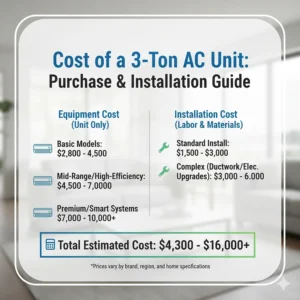
Initial Purchase and Installation Costs: Equipment costs for 3 ton air conditioner systems range from $2,200 to $5,500 depending on efficiency ratings, features, and brand selection. Installation costs typically add $1,500 to $3,500 depending on complexity and local labor rates.
Additional costs may include electrical upgrades, ductwork modifications, permits, and disposal of existing equipment. Comprehensive project budgeting includes all associated costs to avoid surprises during installation.
Annual Operating Costs: Energy costs represent the largest ongoing expense for 3.0 ton systems. High-efficiency units with SEER ratings above 16 typically reduce energy costs by 20-40% compared to minimum efficiency models.
Regional utility rates significantly impact operating costs. Areas with high electricity rates benefit more from high-efficiency equipment investments, while moderate-rate areas may find standard efficiency equipment more cost-effective.
Maintenance and Repair Cost Projections: Annual maintenance costs typically range from $150 to $300 for professional service contracts. DIY maintenance reduces costs but requires time investment and basic technical knowledge.
Major repair costs including compressor replacement, coil replacement, or control system repairs can range from $1,500 to $3,500. Extended warranties and service contracts help manage unexpected repair expenses.
Equipment Lifespan and Replacement Planning: Properly maintained 3 ton central air conditioner systems typically provide 15-20 years of reliable service. High-quality equipment with regular maintenance often exceeds 20-year lifespans.
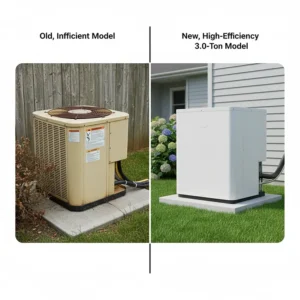
Replacement planning should consider equipment age, efficiency levels, repair history, and changing comfort requirements. Energy savings from high-efficiency replacements often justify earlier replacement of older, inefficient equipment.
Comparative Analysis: Making the Right Choice 🎯
Selecting the optimal 3.0 ton air conditioner requires careful comparison of available options, considering both immediate needs and long-term performance requirements.
Traditional vs. High-Efficiency System Comparison ⚡
The choice between standard efficiency and high-efficiency 3 ton air conditioner systems involves balancing upfront costs with long-term operating savings and performance benefits.
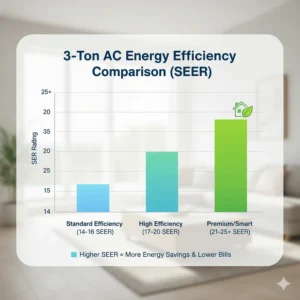
Standard Efficiency Systems (13.4-15 SEER2): Standard efficiency 3.0 ton systems offer reliable performance at competitive prices. These systems typically use single-stage compressors and basic control systems that provide effective cooling at reasonable operating costs.
Installation costs for standard systems are typically lower due to simpler equipment and standard electrical requirements. Maintenance requirements are straightforward, and replacement parts are readily available at competitive prices.
Operating costs for standard efficiency systems are higher than premium options but remain reasonable in moderate climate zones or applications with limited cooling requirements. Payback periods for efficiency upgrades may be extended in these applications.
High-Efficiency Systems (16+ SEER2): High-efficiency 3 ton central air conditioner systems utilize advanced compressor technology, variable-speed operation, and sophisticated controls to maximize performance while minimizing energy consumption.
Two-stage and variable-speed compressors provide precise capacity matching, enhanced humidity control, and improved comfort levels compared to single-stage systems. These features result in more consistent indoor temperatures and better air quality.
Energy savings from high-efficiency equipment typically range from 20-40% compared to standard efficiency models. In high-usage applications or areas with expensive electricity, these savings justify the additional upfront investment within 5-8 years.
Single-Stage vs. Variable-Speed Technology 🌡️
Understanding the performance differences between single-stage and variable-speed 3.0 ton systems helps you select equipment that matches your specific comfort and efficiency requirements.
Single-Stage System Characteristics: Single-stage 3 ton air conditioner systems operate at full capacity whenever cooling is required. This approach provides reliable cooling but may result in temperature swings and reduced humidity control.
Operating characteristics include frequent on/off cycling during moderate weather conditions, which can reduce efficiency and component life. However, single-stage systems offer simplicity, lower initial costs, and straightforward maintenance requirements.
Comfort levels with single-stage systems are generally acceptable for most applications, though some users may notice temperature variations and humidity issues during mild weather periods.
Variable-Speed System Advantages: Variable-speed 3.0 ton systems modulate capacity from approximately 40% to 110% of rated output, providing precise matching to actual cooling loads. This capability results in more consistent temperatures and enhanced humidity control.
Energy savings result from reduced cycling losses and optimized compressor operation at varying load conditions. Variable-speed systems typically operate at lower capacity levels for longer periods, improving efficiency and comfort.
Humidity control advantages are particularly noticeable during mild weather when traditional systems cycle frequently. Variable-speed operation maintains continuous dehumidification while providing gentle cooling.
Price-to-Performance Analysis Across Brands 💡
Different manufacturers offer varying approaches to 3 ton air conditioner design, each with unique advantages and value propositions.
Value-Oriented Brands (Goodman, Ruud): Value-oriented manufacturers focus on reliable performance at competitive prices. These brands typically offer straightforward designs with proven components and comprehensive warranty coverage.
Goodman 3.0 ton systems provide excellent value for standard residential applications with reliable performance and readily available service support. Their focus on simplicity and durability appeals to cost-conscious consumers.
Ruud systems offer similar value propositions with slightly enhanced features and efficiency options. Their reputation for reliability and service support makes them popular choices for both residential and light commercial applications.
Premium Efficiency Brands (MrCool, Senville): Premium brands focus on advanced technology, high efficiency ratings, and innovative features. These manufacturers often introduce new technologies and design approaches to the market.
MrCool systems emphasize ease of installation with pre-charged line sets and quick-connect technology. Their DIY-friendly approach appeals to technically inclined homeowners while maintaining professional performance standards.
Senville systems provide premium efficiency with advanced inverter technology and sophisticated controls. Their focus on variable-speed operation and smart home integration appeals to efficiency-conscious consumers.
Integration Considerations with Existing Systems: Compatibility with existing ductwork, electrical systems, and control equipment affects both installation costs and long-term performance. Some systems require more extensive modifications than others.
Brand-specific control systems and communication protocols may limit integration options with existing smart home systems or building automation equipment. Consideration of these factors helps ensure optimal system integration.
Service support availability varies by brand and region. Established brands with extensive dealer networks typically provide better local service support than newer or specialty manufacturers.
Long-Term Value Propositions 📈
Evaluating long-term value requires consideration of equipment life, efficiency trends, and changing technology requirements over 15-20 year ownership periods.
Technology Evolution and Future-Proofing: Refrigerant transitions, efficiency standards, and smart home integration continue evolving rapidly. Selecting systems with advanced controls and communication capabilities provides better long-term compatibility.
Modular designs that allow component upgrades or feature additions provide flexibility for changing requirements. Systems with standard communication protocols integrate more easily with evolving smart home technologies.
Manufacturer commitment to long-term parts availability and service support affects total ownership costs. Established manufacturers with extensive service networks typically provide better long-term support.
Energy Efficiency Trends and Regulatory Changes: Efficiency standards continue increasing, making high-efficiency equipment more valuable over time. Systems meeting future efficiency requirements maintain higher resale values and avoid forced early replacement.
Utility incentive programs often favor high-efficiency equipment, providing ongoing value through rebates and reduced time-of-use rates. These programs enhance the financial benefits of efficiency investments.
Environmental regulations increasingly favor low-GWP refrigerants and high-efficiency equipment. Selecting systems that exceed current requirements provides protection against future regulatory changes.
Case Studies: Real-World Success Stories 📚
Understanding how 3.0 ton air conditioner systems perform in real-world applications provides valuable insights into equipment selection, installation considerations, and long-term performance expectations.
Residential Retrofit Success Story 🏠
The Johnson family faced challenging cooling issues in their 2,100 square foot two-story colonial home built in 1985. Their existing 3 ton central air conditioner was 18 years old, used R-22 refrigerant, and had a SEER rating of only 10.
Challenge Analysis: The existing system struggled to maintain comfortable temperatures during peak summer conditions, resulting in high energy bills and uneven cooling throughout the home. The second floor consistently ran 4-5 degrees warmer than the first floor, making bedrooms uncomfortable during summer evenings.
Energy bills during peak summer months reached $350-400 monthly, with the aging system running almost continuously during hot weather. Repair costs had escalated, with refrigerant charges and component replacements becoming increasingly expensive.
Solution Implementation: After professional load calculations and system analysis, the family selected a Goodman 3 Ton 15.2 SEER2 Variable-Speed System with enhanced humidity control features. The installation included ductwork modifications to improve airflow distribution and zone dampers for better temperature control.
The new system installation required three days, including ductwork modifications, electrical upgrades, and complete system commissioning. Total project costs were $6,800, including equipment, installation, and electrical work.
Results and Performance: First-year energy savings exceeded 40%, reducing peak summer electric bills to $210-240 monthly. The variable-speed operation eliminated temperature variations between floors, providing consistent comfort throughout the home.
Humidity control improvements were immediately noticeable, with indoor humidity levels maintained between 45-55% even during hot, humid weather. The quiet operation of the variable-speed system eliminated the noise issues associated with the old equipment.
Three-year performance tracking shows continued energy savings averaging 38% compared to the old system. No major repairs have been required, and routine maintenance has been minimal.
Commercial Application Case Study 🏢
A 3,200 square foot medical office complex required reliable climate control for patient comfort and equipment protection. The existing system was undersized and unable to maintain consistent temperatures during peak occupancy periods.
Application Requirements: Medical equipment, computer systems, and pharmaceutical storage required precise temperature and humidity control. Patient comfort and staff productivity depended on consistent environmental conditions throughout the facility.
Operating schedules included evening and weekend hours, requiring flexible system operation and energy management capabilities. Zone control was necessary to accommodate varying occupancy levels in different areas of the facility.
System Selection and Design: Two MrCool Universal 3 Ton 20 SEER Systems were installed with zone control systems to provide independent climate control for different areas. Variable-speed operation ensures precise temperature control while minimizing energy consumption.
Smart thermostats with occupancy sensors automatically adjust operation based on actual usage patterns. The system design includes redundancy features to ensure continued operation if one unit requires service.
Implementation Results: Installation was completed over a weekend to minimize disruption to patient care. The new systems provide precise temperature control within ±1 degree throughout the facility.
Energy consumption decreased by 35% compared to the old system despite improved comfort levels. Zone control allows different areas to operate at optimal temperatures based on actual usage patterns.
Patient satisfaction surveys showed significant improvement in comfort ratings. Staff productivity improved due to better environmental conditions and reduced temperature-related complaints.
Long-Term Performance: Two-year operation shows consistent performance with minimal maintenance requirements. Predictive maintenance features have identified and resolved potential issues before they affected operation.
Energy savings have exceeded projections, with annual operating costs 40% lower than the previous system. The investment payback period was 4.2 years, ahead of the projected 5-year timeline.
Multi-Unit Residential Development 🏘️
A 24-unit condominium development required standardized 3.0 ton air conditioner systems for individual units ranging from 1,400 to 1,800 square feet. The project emphasized energy efficiency, quiet operation, and minimal maintenance requirements.
Project Specifications: Each unit required independent climate control with high efficiency ratings to minimize operating costs for residents. Quiet operation was essential due to close proximity between units and outdoor equipment.
Installation logistics required coordination with construction schedules and utility connections. Standardization was important for maintenance efficiency and parts inventory management.
Equipment Selection: Senville 3 Ton Variable-Speed Heat Pump Systems were selected for their high efficiency ratings, quiet operation, and comprehensive warranty coverage. Standardization simplified installation and future maintenance requirements.
Heat pump operation provides both heating and cooling capabilities, eliminating the need for separate heating systems in the moderate climate location. Variable-speed technology ensures quiet operation and optimal efficiency.
Installation and Commissioning: Coordinated installation over 6 weeks minimized disruption to construction schedules. Pre-fabricated equipment pads and standardized electrical connections streamlined the installation process.
Comprehensive commissioning included performance verification for each unit and documentation of all system settings. Resident education programs helped optimize system operation and maintenance.
Project Outcomes: All units achieved Energy Star certification, enhancing marketability and resident appeal. Average energy costs for heating and cooling are 30% below comparable developments with standard efficiency equipment.
Quiet operation has eliminated noise complaints between units. Property management reports minimal service calls and maintenance requirements during the first three years of operation.
Resident satisfaction surveys consistently rate climate control systems as excellent. The standardized approach has simplified maintenance planning and reduced service costs for the property management company.
Future Trends and Market Evolution 🚀
The 3.0 ton air conditioner market continues evolving rapidly, driven by technological advances, environmental regulations, and changing consumer expectations for comfort, efficiency, and smart home integration.
Emerging Technologies and Innovation Directions 🔬
Advanced technologies are transforming 3 ton air conditioner design, offering improved efficiency, enhanced comfort, and new capabilities that were unimaginable just a few years ago.
Artificial Intelligence and Machine Learning Integration: Next-generation 3.0 ton systems incorporate AI algorithms that learn from usage patterns, weather forecasts, and occupancy schedules to optimize performance automatically. These systems predict cooling loads and adjust operation proactively rather than reactively.
Machine learning capabilities analyze system performance data to identify efficiency improvement opportunities and predict maintenance needs. Advanced diagnostics can detect developing issues weeks or months before they would traditionally be noticed.
Predictive controls use weather forecasting data to pre-cool homes during off-peak utility hours, reducing energy costs while maintaining comfort. These systems balance thermal mass, insulation characteristics, and utility rate structures to minimize operating expenses.
Advanced Refrigerant Technologies: Next-generation refrigerants promise even better environmental performance while maintaining or improving thermal efficiency. R-290 (propane) and other natural refrigerants offer near-zero global warming potential with excellent thermodynamic properties.
Magnetic refrigeration and other alternative cooling technologies may eventually replace traditional vapor-compression systems. While still in development, these technologies offer potential for significant efficiency improvements and environmental benefits.
Micro-channel heat exchangers and advanced coil designs continue improving heat transfer efficiency while reducing refrigerant charge requirements. These technologies enhance performance while minimizing environmental impact.
Internet of Things (IoT) Integration: Smart 3 ton central air conditioner systems integrate seamlessly with home automation platforms, providing unprecedented control and monitoring capabilities. IoT sensors throughout the home optimize comfort and efficiency automatically.
Advanced analytics platforms aggregate performance data from thousands of systems to identify optimization opportunities and benchmark performance. These insights drive continuous improvement in system design and operation.
Remote diagnostic capabilities enable service technicians to troubleshoot issues and optimize performance without site visits. This technology reduces service costs while improving system reliability and performance.
Market Trends and Consumer Behavior Shifts 📊
Consumer expectations for 3.0 ton air conditioner systems continue evolving, driven by increased awareness of energy costs, environmental impact, and advanced technology capabilities.
Energy Consciousness and Efficiency Priorities: Rising energy costs drive increased demand for high-efficiency 3 ton air conditioner systems. Consumers increasingly view efficiency investments as essential rather than optional features.
Utility time-of-use rates and demand response programs create new value propositions for smart, efficient systems. Advanced controls that optimize operation based on utility rates provide ongoing financial benefits.
Zero-net-energy homes and sustainable building practices require ultra-high-efficiency HVAC systems. 3.0 ton systems with SEER ratings above 20 become standard for premium sustainable construction.
Smart Home Integration Expectations: Modern consumers expect seamless integration between HVAC systems and smart home platforms. Voice control, smartphone apps, and automated scheduling are increasingly considered essential features.
Home energy management systems integrate HVAC operation with solar panels, battery storage, and other distributed energy resources. These systems optimize overall energy usage and minimize grid dependency.
Indoor air quality monitoring and control become standard features rather than premium options. Advanced filtration, UV germicidal systems, and real-time air quality monitoring enhance health and comfort.
Service and Maintenance Evolution: Predictive maintenance powered by IoT sensors and AI analytics transforms service from reactive to proactive. Systems schedule their own maintenance and order parts automatically.
Augmented reality tools assist technicians with troubleshooting and repair procedures. Remote expert assistance reduces service time and improves first-time fix rates.
Extended warranty programs and service contracts provide comprehensive coverage including parts, labor, and performance guarantees. These programs reduce ownership risks while ensuring optimal performance.
Sustainability and Environmental Considerations 🌱
Environmental stewardship drives significant changes in 3.0 ton air conditioner design, manufacturing, and operation. Sustainability considerations increasingly influence consumer decisions and regulatory requirements.
Circular Economy and Lifecycle Management: Manufacturers increasingly design 3 ton central air conditioner systems for recyclability and component reuse. Modular designs allow component upgrades rather than complete system replacement.
Take-back programs for end-of-life equipment ensure proper recycling and material recovery. These programs reduce environmental impact while providing valuable materials for new equipment manufacturing.
Lifecycle assessment tools help consumers understand the complete environmental impact of equipment choices. These tools consider manufacturing, operation, and disposal impacts over the entire product lifecycle.
Carbon Footprint Reduction: Low-carbon manufacturing processes and renewable energy use in production facilities reduce the carbon footprint of new equipment. Sustainable manufacturing becomes a competitive differentiator.
Carbon-neutral operation goals drive development of ultra-high-efficiency systems and integration with renewable energy sources. Heat pump technology gains market share due to electrification benefits.
Building decarbonization initiatives favor electric heat pump systems over gas-fired equipment. 3.0 ton heat pumps provide both heating and cooling while supporting renewable energy integration.
Personalization and Customization Possibilities 🎨
Future 3 ton air conditioner systems offer unprecedented customization and personalization capabilities, adapting to individual preferences and usage patterns.
Individual Comfort Profiles: Advanced control systems learn individual comfort preferences and adjust operation automatically based on occupancy patterns. Multi-zone systems provide personalized comfort for different family members.
Biometric sensors and wearable device integration provide real-time feedback on individual comfort levels. Systems adjust operation based on actual physiological responses rather than just temperature measurements.
Seasonal adaptation algorithms modify operation based on changing preferences and weather patterns. These systems continuously optimize comfort while minimizing energy consumption.
Modular System Architectures: Modular equipment designs allow capacity additions and feature upgrades without complete system replacement. These systems adapt to changing requirements over their service life.
Component-level monitoring and replacement optimize system performance and extend equipment life. Individual components can be upgraded or replaced based on performance data and usage patterns.
Flexible installation options accommodate unique architectural requirements and aesthetic preferences. Concealed installations and architectural integration become more common.
Investment and Purchase Decision Framework 💰
Making informed decisions about 3.0 ton air conditioner investments requires systematic evaluation of costs, benefits, and long-term value propositions.
Cost-Benefit Analysis Framework 📈
Comprehensive cost-benefit analysis considers all aspects of 3 ton air conditioner ownership including initial costs, operating expenses, maintenance requirements, and residual value.
Initial Investment Evaluation: Equipment costs vary significantly based on efficiency ratings, features, and brand selection. High-efficiency systems command premium prices but provide superior long-term value in most applications.
Installation costs depend on system complexity, site requirements, and local labor rates. Complex installations with ductwork modifications or electrical upgrades increase total project costs significantly.
Financing options including manufacturer rebates, utility incentives, and low-interest loan programs reduce effective initial costs. These programs often make high-efficiency equipment more affordable than standard options.
Operating Cost Projections: Energy costs represent the largest long-term expense for 3.0 ton systems. Accurate operating cost projections require consideration of local utility rates, usage patterns, and efficiency ratings.
Seasonal efficiency variations affect actual performance compared to rated SEER values. Real-world efficiency typically ranges from 80-95% of rated values depending on climate conditions and installation quality.
Utility rate structures including time-of-use rates and demand charges increasingly favor high-efficiency equipment with smart controls. These rate structures enhance the value proposition for premium systems.
Return on Investment Calculations: Simple payback analysis compares additional costs for high-efficiency equipment against annual energy savings. Typical payback periods range from 3-8 years depending on efficiency levels and local utility rates.
Net present value analysis considers the time value of money and provides more accurate investment evaluation. This analysis typically shows positive returns for efficiency investments in most climates.
Internal rate of return calculations help compare HVAC investments with other home improvement projects. High-efficiency 3 ton central air conditioner systems often provide attractive returns compared to alternative investments.
Budget Planning and Financing Options 💳
Effective budget planning ensures adequate resources for optimal equipment selection while managing cash flow requirements.
Total Project Cost Estimation: Comprehensive project budgets include equipment costs, installation expenses, permit fees, and potential additional work such as electrical upgrades or ductwork modifications.
Contingency allowances of 10-15% accommodate unexpected issues or change orders during installation. Complex installations or older homes may require larger contingency amounts.
Value engineering exercises identify opportunities to optimize performance while managing costs. Professional guidance helps prioritize features and investments for maximum value.
Financing Strategy Development: Cash purchases provide maximum flexibility and eliminate financing costs but require significant upfront investment. This approach works well for planned replacements with adequate savings.
Manufacturer financing programs often provide competitive rates and promotional terms for qualified buyers. These programs may include deferred payments or reduced interest rates for specific periods.
Home equity loans and credit lines typically provide lower interest rates for major home improvements. These options preserve cash for other uses while spreading costs over longer periods.
Utility Incentive and Rebate Programs: Federal tax credits for high-efficiency equipment reduce effective costs significantly. Current programs provide credits up to 30% of equipment costs for qualifying systems.
State and local utility incentive programs vary widely but often provide substantial rebates for high-efficiency 3.0 ton systems. These programs may also include performance bonuses and financing assistance.
Demand response programs provide ongoing credits for systems that participate in utility load management. These programs create additional value for smart, connected systems.
Decision Criteria and Evaluation Matrices 🎯
Systematic evaluation criteria ensure optimal equipment selection based on specific requirements and priorities.
Performance Criteria Weighting: Energy efficiency ratings should receive significant weight in most applications due to long-term operating cost impacts. SEER2 ratings above 16 typically provide good value in moderate to high-usage applications.
Comfort features including humidity control, quiet operation, and temperature consistency affect daily quality of life. These factors may justify premium equipment costs for discerning homeowners.
Reliability and warranty coverage protect against unexpected repair costs and ensure continued operation. Comprehensive warranties with local service support provide additional value and peace of mind.
Installation and Service Considerations: Contractor selection significantly impacts installation quality and long-term performance. Qualified, experienced contractors justify premium labor costs through superior installation quality.
Local service support availability affects ongoing maintenance costs and system reliability. Equipment with strong local dealer networks typically provides better long-term support.
Brand reputation and track record provide insights into long-term reliability and customer satisfaction. Established brands with proven performance histories often justify premium pricing.
Future-Proofing Evaluation: Technology compatibility with evolving smart home systems ensures long-term functionality and value. Open communication protocols provide better integration flexibility.
Regulatory compliance with evolving efficiency standards and refrigerant requirements protects against forced early replacement. Equipment exceeding current requirements provides better long-term value.
Upgrade and modification possibilities allow systems to adapt to changing requirements over their service life. Modular designs and standard interfaces enhance long-term flexibility.
Measuring Success Metrics and KPIs 📊
Establishing clear success metrics enables objective evaluation of 3.0 ton air conditioner performance and investment returns.
Energy Performance Monitoring: Monthly energy consumption tracking compared to previous systems or baseline projections quantifies efficiency improvements. Smart meters and monitoring systems provide detailed usage data.
Degree-day normalization adjusts energy consumption for weather variations, providing accurate year-over-year comparisons. This analysis identifies performance trends and optimization opportunities.
Peak demand reduction measurements quantify benefits for utility demand charges and grid impact. Variable-speed systems typically provide significant peak demand benefits.
Comfort and Indoor Air Quality Metrics: Temperature consistency measurements using data logging thermometers quantify comfort improvements. Professional comfort surveys provide subjective feedback on system performance.
Humidity control effectiveness measured through continuous monitoring validates system dehumidification capabilities. Proper humidity control enhances comfort while preventing moisture-related issues.
Indoor air quality monitoring including particulate levels, VOCs, and other contaminants demonstrates filtration system effectiveness and overall air quality improvements.
Financial Performance Tracking: Return on investment calculations updated annually track actual performance against projections. These calculations help validate equipment selection decisions and guide future investments.
Total cost of ownership analysis including energy costs, maintenance expenses, and repairs provides comprehensive financial performance assessment. This analysis guides replacement timing and equipment selection.
Utility incentive and rebate tracking ensures all available programs are utilized and benefits are captured. Many programs require performance verification and ongoing compliance monitoring.
Frequently Asked Questions ❓
❓ How much does a 3.0 ton air conditioner cost to install?
❓ What size home does a 3 ton air conditioner cool effectively?
❓ How often should I replace the air filter in my 3 ton AC unit?
❓ What SEER rating should I look for in a 3.0 ton air conditioner?
❓ Can I install a 3 ton central air conditioner myself?
🛒 Get Your Perfect 3.0 Ton Air Conditioner Today!
Ready to upgrade your home comfort with a premium 3.0 ton air conditioner? These carefully selected systems offer the perfect balance of efficiency, reliability, and value. Click on any highlighted product to check current pricing, read customer reviews, and secure your cooling solution today! ❄️✨
Conclusion: Your Path to Ultimate Cooling Comfort 🌟
Selecting the right 3.0 ton air conditioner transforms your home into a comfortable sanctuary while providing years of reliable, efficient cooling. From budget-friendly Goodman systems to premium Senville and innovative MrCool options, there’s a perfect solution for every home and budget.
The key to making the right choice lies in understanding your specific needs, evaluating long-term costs, and selecting equipment that balances performance, efficiency, and reliability. Whether you prioritize energy savings, advanced features, or straightforward reliability, the 3 ton air conditioner market offers excellent options to meet your requirements.
Remember that professional installation and regular maintenance are crucial for optimal performance and longevity. Invest in quality equipment and professional service to ensure years of comfortable, efficient cooling.
🌟 Transform Your Home Comfort Today!
Don’t let another summer pass with inadequate cooling. Choose from these top-rated 3.0 ton air conditioner systems and start enjoying perfect indoor comfort while saving money on energy bills. Your family deserves the best in cooling technology! 🏠❄️
Recommended for You
- 7 Best 2.5 Ton Air Conditioner Units That Deliver Powerful Cooling in 2025
- 2 Ton Air Conditioner: 7 Best Models for Ultimate Home Cooling in 2025
- 7 Best Dometic Marine Air Conditioner Systems For Ultimate Boat Comfort in 2025
Disclaimer: This article contains affiliate links. If you purchase products through these links, we may earn a small commission at no additional cost to you.
✨ Found this helpful? Share it with your friends! 💬🤗
