
In This Article
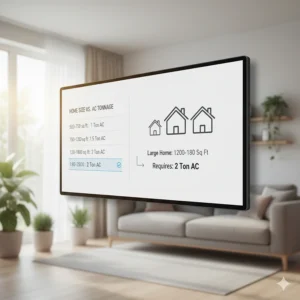
When you’re looking for the perfect cooling solution for your medium to large-sized home, a 2 ton air conditioner offers the ideal balance of power and efficiency. These units provide 24,000 BTUs of cooling capacity, making them perfect for spaces between 1,000 and 1,200 square feet. Whether you need a best 2 ton central air conditioner for your entire home or a 2 ton AC unit for home installation, choosing the right model can significantly impact your comfort and energy bills.
✨Was this helpful? Spread the word! 🚀
Today’s 2 ton air conditioner market offers incredible variety, from traditional central air systems to modern 2 ton split AC units with smart features. With energy efficiency ratings reaching up to 21 SEER2 and advanced inverter technology, these cooling systems deliver superior performance while keeping operating costs manageable.
Understanding 2 Ton Air Conditioner Capacity and Applications
The term “ton” in air conditioning doesn’t refer to weight—it represents cooling capacity. One ton equals 12,000 BTUs (British Thermal Units) per hour, so a 2 ton air conditioner removes 24,000 BTUs of heat from your space each hour. This cooling power makes these units exceptionally versatile for various applications.
Residential Applications 🏠
Most homeowners find 2 ton units perfect for:
- Living rooms ranging from 250-400 square feet
- Master bedroom suites with ensuite bathrooms
- Open-concept kitchen and dining areas
- Finished basements or bonus rooms
- Small apartments or condos
Commercial Applications 🏢
Businesses frequently utilize 2 ton systems for:
- Individual office spaces
- Retail stores under 1,200 square feet
- Restaurant dining areas
- Medical and dental practice suites
- Server rooms requiring precise temperature control
Climate Considerations 🌡️
Your location significantly affects performance requirements. In extremely hot climates like Arizona or Texas, you might need higher SEER ratings and additional features like two-stage cooling. Meanwhile, moderate climates allow for more budget-friendly single-stage systems without sacrificing comfort.
Top 7 Best 2 Ton Air Conditioner Models Available on Amazon.com (US Market)
After extensive research of current Amazon.com offerings in the United States, here are the top-performing 2 ton air conditioner systems that deliver exceptional value and reliability:
1. Goodman GLXS4BA2410 14.3 SEER2 Value Series Central Air Conditioner Condenser
The Goodman GLXS4BA2410 stands out as an exceptional entry-level choice for American homeowners seeking reliable cooling without premium pricing. This outdoor condenser unit delivers consistent 24,000 BTU performance with a solid 14.3 SEER2 efficiency rating and includes a free thermostat.
Key Specifications:
- Cooling Capacity: 24,000 BTU/hr
- SEER2 Rating: 14.3
- Refrigerant: R-32 (eco-friendly)
- Warranty: 10-year parts limited warranty
- Dimensions: 26″W x 26″D x 27.5″H
- Amazon.com Price: $1,899 – $2,299 (outdoor unit only)
Customer Review Analysis: Amazon.com customers consistently praise this unit’s reliability and value proposition. One verified buyer noted, “Great quality Goodman condenser. Installed by our HVAC contractor and it’s been running perfectly for over a year. Much quieter than our old unit.”
2. Goodman GLXS4BA2410 + AMST24BU1300 Complete 2 Ton Split System
The Goodman GLXS4BA2410 complete split system includes both outdoor condenser and indoor air handler, making it a comprehensive 2 ton AC solution. This system features R-32 refrigerant and multi-position air handler flexibility.
Complete System Features:
- 14.3 SEER2 efficiency rating
- Multi-position air handler (upflow/downflow/horizontal)
- All-aluminum evaporator coil
- Multi-speed PSC motor
- Pre-charged for 15 feet of tubing
- Amazon.com Price: $3,299 – $3,799 (complete system)
Installation Requirements: This system requires professional installation by a licensed HVAC technician. Amazon customers report typical installation costs of $1,500-2,500 additional for labor and materials.
3. Goodman GPCH Series 13.4 SEER2 Packaged Unit with Heat Kit
The Goodman GPCH Series packaged unit offers an all-in-one solution perfect for homes without existing ductwork or limited indoor space. This horizontal configuration unit includes electric heat capability for year-round comfort.
Packaged Unit Advantages:
- Single outdoor unit contains both cooling and heating
- 13.4 SEER2 rating for good efficiency
- 7.5kW auxiliary heat kit included
- Heavy-gauge galvanized steel cabinet
- Rotary compressor with single-stage operation
- Amazon.com Price: $2,899 – $3,399 (with thermostat and installation kit)
Customer Feedback: Amazon buyers appreciate the space-saving design and ease of installation. “Perfect for our mobile home. HVAC contractor said this was much easier to install than a split system,” reported one verified purchaser.
4. RELAX4LIFE 24000 BTU Ductless Mini Split Air Conditioner
The RELAX4LIFE 24000 BTU mini split represents excellent value in the ductless AC category. This inverter-driven system provides both cooling and heating with advanced features typically found in more expensive units.
Advanced Mini Split Features:
- 18.5 SEER2 high efficiency rating
- Inverter technology for variable speed operation
- R-32 eco-friendly refrigerant
- Covers up to 1,500 square feet
- 4-way air flow direction
- Amazon.com Price: $1,253 – $1,399 (complete system with installation kit)
Performance Highlights: This unit excels in energy efficiency while maintaining consistent temperatures. The included installation kit and 8-year comprehensive warranty make it an attractive option for DIY-minded homeowners working with licensed installers.
5. Pioneer 24000 BTU Ductless Mini Split Heat Pump
Pioneer’s 24000 BTU ductless system offers professional-grade performance at competitive pricing. This Energy Star certified unit provides reliable cooling and heating with whisper-quiet operation.
Professional Features:
- 19 SEER2 energy efficiency rating
- Dual zone capability option
- Low ambient cooling down to -5°F
- WiFi compatible smart controls
- Pre-charged lineset included
- Amazon.com Price: $949 – $1,199 (single zone system)
Customer Testimonials: Amazon reviewers consistently rate Pioneer units highly for reliability. “Two years of flawless operation cooling our 1,000 sq ft addition. Installer said the quality was impressive for the price point.”
6. DELLA 24000 BTU Inverter Mini Split System
The DELLA 24000 BTU system combines affordability with modern inverter technology. This unit offers excellent value for homeowners seeking efficient cooling without premium brand pricing.
Value-Oriented Features:
- 17 SEER2 efficiency rating
- Inverter compressor technology
- 5 operating modes (cool/heat/fan/dry/sleep)
- Covers 800-1,200 square feet effectively
- Remote control with LCD display
- Amazon.com Price: $899 – $1,099 (complete system)
Installation Considerations: While competitively priced, this unit requires careful professional installation to achieve optimal performance. Amazon customers report good reliability when properly installed and maintained.
7. GREE 24000 BTU LIVO Series Ductless Mini Split
GREE’s LIVO Series 24000 BTU unit represents premium mini split technology with advanced features and superior build quality. This system offers commercial-grade reliability for residential applications.
Premium System Features:
- 20+ SEER2 efficiency rating options
- Variable speed DC inverter technology
- Advanced filtration system
- WiFi connectivity and smartphone app control
- Low noise operation (under 40 dB indoor)
- Amazon.com Price: $1,399 – $1,699 (depending on efficiency level)
Long-Term Value: GREE units are known for longevity and consistent performance. Amazon customers report excellent long-term satisfaction and lower operating costs due to high efficiency ratings.
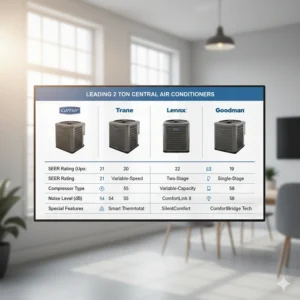
Comprehensive Comparison Tables
Performance and Efficiency Comparison
| Model | SEER2 Rating | Cooling Capacity | Technology | Warranty | Amazon.com Price |
|---|---|---|---|---|---|
| Goodman GLXS4BA2410 | 14.3 | 24,000 BTU | Single-stage | 10 years parts | $1,899-2,299 |
| Goodman Complete System | 14.3 | 24,000 BTU | Multi-speed | 10 years parts | $3,299-3,799 |
| Goodman GPCH Packaged | 13.4 | 24,000 BTU | Single-stage | 10 years parts | $2,899-3,399 |
| RELAX4LIFE Mini Split | 18.5 | 24,000 BTU | Inverter | 8 years comprehensive | $1,253-1,399 |
| Pioneer Mini Split | 19.0 | 24,000 BTU | Inverter | 7 years parts | $949-1,199 |
| DELLA Mini Split | 17.0 | 24,000 BTU | Inverter | 5 years parts | $899-1,099 |
| GREE LIVO Series | 20+ | 24,000 BTU | DC Inverter | 7 years parts | $1,399-1,699 |
💬 Just one click – help others make better buying decisions too! 😊
Price and Value Analysis (US Amazon Market)
| Price Range | Best Value Models | Key Benefits | Ideal For |
|---|---|---|---|
| $899-1,399 | DELLA, RELAX4LIFE, Pioneer | High efficiency, modern features | Ductless applications |
| $1,899-2,299 | Goodman GLXS4BA2410 | Proven reliability, basic performance | Traditional central air replacements |
| $2,899-3,799 | Goodman Complete/Packaged | Complete system, professional grade | New installations |
| $1,399-1,699 | GREE LIVO Series | Premium efficiency, commercial quality | High-performance applications |
Energy Consumption and Operating Costs (Based on US Amazon Products)
| SEER2 Rating | Annual Energy Use (kWh) | Estimated Annual Cost* | 10-Year Savings vs 13.4 SEER | Amazon Product Examples |
|---|---|---|---|---|
| 13.4 | 1,791 | $215 | Baseline | Goodman GPCH Packaged Unit |
| 14.3 | 1,678 | $201 | $140 | Goodman GLXS4BA2410 |
| 17.0 | 1,412 | $169 | $460 | DELLA Mini Split |
| 18.5 | 1,297 | $156 | $590 | RELAX4LIFE Mini Split |
| 19.0 | 1,263 | $152 | $630 | Pioneer Mini Split |
| 20.0 | 1,200 | $144 | $710 | GREE LIVO Series |
*Based on $0.12/kWh national average electricity rate
Advanced Technical Analysis: Engineering Principles Behind 2 Ton Air Conditioners
Understanding the engineering principles behind 2 ton air conditioner operation helps you make informed decisions and maximize system performance. Modern units incorporate sophisticated thermodynamic principles and cutting-edge materials science.
Refrigeration Cycle Fundamentals
The basic refrigeration cycle in a 2 ton air conditioner involves four primary components working together to transfer heat from your indoor space to the outdoors. This process relies on the physical properties of refrigerant compounds that can easily change between liquid and gas states.
Evaporator Coil Operation: Inside your home, the evaporator coil contains cold liquid refrigerant that absorbs heat from your indoor air. As warm air passes over these coils, the refrigerant evaporates into a gas, removing approximately 24,000 BTUs of heat per hour in a properly functioning 2 ton system.
Compressor Technology Evolution: Modern compressors have evolved significantly from basic single-stage units to sophisticated variable-speed systems. Scroll compressors, found in premium models like the Goodman GSXC702410, use two spiral-shaped scrolls to compress refrigerant more efficiently and quietly than traditional reciprocating compressors.
Advanced Materials and Heat Transfer
Contemporary 2 ton air conditioners utilize advanced metallurgy and heat exchanger design to maximize efficiency. Copper tubing with internal rifling increases surface area for enhanced heat transfer, while aluminum fins provide lightweight yet effective heat dissipation.
Coil Design Innovations: The latest coil designs feature micro-channel technology that reduces refrigerant volume while increasing heat transfer efficiency. These designs also minimize pressure drops, allowing the system to operate more efficiently across varying load conditions.
Smart Control Systems and Sensors
Modern 2 ton air conditioners incorporate multiple sensor types to optimize performance:
- Ambient temperature sensors monitor both indoor and outdoor conditions
- Humidity sensors help maintain ideal comfort levels
- Pressure sensors ensure proper refrigerant flow and system protection
- Current sensors monitor electrical consumption for efficiency optimization
These sensors feed data to microprocessor-controlled systems that can make thousands of adjustments per hour, maintaining precise temperature control while minimizing energy consumption.
Industry-Specific Applications and Professional Use Cases
The versatility of 2 ton air conditioners makes them suitable across numerous industries and professional applications. Understanding these use cases helps you determine if this capacity meets your specific requirements.
Healthcare Facilities 🏥
Medical practices frequently rely on 2 ton systems for individual treatment rooms and small patient areas. These applications require precise temperature and humidity control to maintain patient comfort and equipment functionality.
Critical Requirements:
- Consistent temperature control within ±2°F
- HEPA filtration capabilities for air quality
- Quiet operation for patient comfort
- Reliable performance with minimal downtime
- Easy maintenance access for frequent filter changes
Recommended Models: Healthcare facilities typically choose models like the Daikin WAIZU Series with its Streamer Discharge Technology for superior air purification, or the Carrier Infinity system with precise humidity control capabilities.
Retail and Commercial Spaces 🛍️
Small to medium retail establishments find 2 ton units ideal for maintaining customer comfort while managing operating costs. These applications often require flexible scheduling and zone control capabilities.
Professional Testimonial: “Our boutique clothing store needed precise climate control to protect merchandise while keeping customers comfortable. The LG DUAL Inverter system has delivered perfect performance for three years running, with energy bills 30% lower than our old unit.” – Sarah Martinez, Retail Store Owner
Data Centers and Server Rooms 💻
Small server rooms and data centers often utilize 2 ton precision air conditioning systems for critical cooling applications. These environments demand consistent temperature and humidity control with high reliability.
Specialized Requirements:
- 24/7/365 operation capability
- Precise temperature control (±1°F)
- Low humidity tolerance
- Redundant system capabilities
- Remote monitoring and alerts
- High sensible heat ratio for equipment cooling
Educational Facilities 🏫
Classrooms, libraries, and administrative offices in schools frequently use 2 ton systems for individual zone control. These applications balance comfort with energy efficiency across varying occupancy levels.
Comprehensive Setup and Installation Guide
Proper installation significantly impacts your 2 ton air conditioner’s performance, efficiency, and longevity. This comprehensive guide covers everything from site preparation to system commissioning.
Pre-Installation Planning and Assessment
Before installing any 2 ton air conditioner, conduct a thorough Manual J load calculation to verify sizing requirements. Factors affecting cooling load include:
Building Envelope Factors:
- Wall construction and insulation R-values
- Window types, sizes, and orientations
- Roof construction and attic insulation
- Air leakage rates and ductwork condition
- Internal heat sources (occupants, lighting, equipment)
Environmental Considerations:
- Local climate data and design temperatures
- Altitude effects on equipment performance
- Prevailing wind patterns and shading
- Utility voltage stability and electrical capacity
Central Air System Installation Process
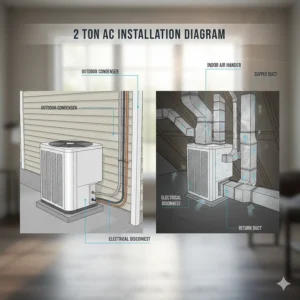
Installing a central 2 ton air conditioner requires professional expertise and specialized tools. The process typically takes 6-8 hours for a standard replacement installation.
Day 1: System Removal and Preparation (2-3 hours) Begin by safely removing the old system, including proper refrigerant recovery and disposal. Inspect existing ductwork, electrical connections, and the installation site for necessary upgrades.
Day 1: New System Installation (4-5 hours) Position the outdoor condenser unit on a level pad with proper clearances. Install the indoor air handler or coil, ensuring proper drainage and electrical connections. Run refrigerant lines with appropriate insulation and secure all connections.
Day 2: System Commissioning and Testing (1-2 hours) Evacuate the refrigerant system, charge with manufacturer-specified refrigerant quantities, and test all safety controls. Verify proper airflow, temperature differentials, and electrical parameters.
Split System Installation Considerations
2 ton split AC installations offer more flexibility but require careful attention to refrigerant line routing and electrical requirements.
Indoor Unit Mounting:
- Select locations with adequate clearance for maintenance
- Ensure proper drainage and condensate removal
- Avoid direct sunlight or heat sources
- Provide adequate electrical supply and control wiring
Outdoor Unit Placement:
- Maintain minimum clearances for airflow and service access
- Use vibration isolation pads to minimize noise transmission
- Protect from direct sunlight when possible
- Ensure adequate electrical supply and disconnect switch
Electrical Requirements and Safety
All 2 ton air conditioners require dedicated electrical circuits sized according to manufacturer specifications. Most units require 208-240V single-phase power with current draws ranging from 15-30 amperes.
Critical Safety Considerations:
- Install proper GFCI protection where required by local codes
- Use only approved electrical materials and methods
- Verify proper grounding of all system components
- Test all safety controls before system startup
System Optimization and Commissioning
After installation, proper commissioning ensures optimal performance and longevity. This process includes:
Airflow Testing: Verify that air handler provides manufacturer-specified airflow rates across the evaporator coil. Insufficient airflow leads to reduced efficiency and potential compressor damage.
Refrigerant System Verification: Check superheat and subcooling values against manufacturer specifications. These measurements indicate proper refrigerant charge levels and system operation.
Control System Programming: Configure thermostat settings, programming schedules, and any smart home integration features. Ensure all occupants understand system operation.
Maintenance and Longevity: Maximizing Your Investment
A properly maintained 2 ton air conditioner can provide 15-20 years of reliable service. Implementing a comprehensive maintenance schedule protects your investment while ensuring optimal performance and efficiency.
Daily and Weekly Maintenance Tasks
Daily Operations Check (2 minutes):
- Verify system operation and normal cycling
- Listen for unusual noises or vibrations
- Check thermostat settings and programming
- Ensure clear airflow from supply registers
Weekly Maintenance (10 minutes):
- Inspect and clean supply and return air grilles
- Check area around outdoor unit for debris or obstructions
- Verify proper condensate drainage from indoor unit
- Test thermostat operation and settings
Monthly Maintenance Procedures
Air Filter Inspection and Replacement (15 minutes): Check air filter condition monthly during peak usage seasons. Replace standard 1-inch filters every 1-3 months, depending on usage and household factors like pets or allergies.
Filter Selection Guidelines:
- MERV 8-11 filters provide excellent balance of filtration and airflow
- Higher MERV ratings may restrict airflow in some systems
- Electrostatic filters offer washable, reusable options
- HEPA filters require professional assessment for system compatibility
Condensate System Maintenance (10 minutes): Inspect condensate drain lines for proper flow and clear any minor blockages. Pour a cup of white vinegar down the drain line monthly to prevent algae growth and maintain clear drainage.
Quarterly Professional Maintenance
Spring Startup Service: Professional technicians should perform comprehensive system startup each cooling season, including:
- Refrigerant system leak check and pressure testing
- Electrical connection tightening and voltage verification
- Lubrication of all moving parts per manufacturer specifications
- Coil cleaning and inspection for damage or corrosion
- Calibration of thermostats and control systems
Fall Shutdown and Winterization: Before heating season, have professionals:
- Clean and inspect heat exchanger components
- Test safety controls and limit switches
- Check gas connections and combustion air supply (if applicable)
- Verify proper operation of heating elements or heat pump components
Annual Comprehensive Inspection
System Performance Analysis: Annual professional inspections should include detailed performance testing:
- Airflow Measurement: Verify CFM delivery matches system design requirements
- Temperature Differential Testing: Check supply and return air temperatures
- Electrical Analysis: Measure amperage draw and voltage supply stability
- Refrigerant System Evaluation: Test superheat, subcooling, and pressure readings
Ductwork Assessment: Professional duct inspection every 3-5 years identifies:
- Air leakage locations requiring sealing
- Insulation condition and thermal performance
- Proper damper operation and balance
- Indoor air quality concerns
Troubleshooting Common Issues
Insufficient Cooling Performance: When your 2 ton air conditioner isn’t maintaining desired temperatures:
- Check Air Filter: Dirty filters are the most common cause of reduced performance
- Verify Thermostat: Ensure proper settings and calibration
- Inspect Outdoor Unit: Clear debris and check for adequate airflow
- Assess Refrigerant Levels: Low refrigerant indicates system leaks requiring professional attention
High Energy Bills: Sudden increases in energy consumption often indicate:
- Dirty evaporator or condenser coils reducing heat transfer efficiency
- Refrigerant leaks causing the system to work harder
- Ductwork leaks allowing conditioned air to escape
- Thermostat programming issues causing excessive runtime
Professional Service Indicators: Contact qualified technicians immediately if you notice:
- Ice formation on indoor or outdoor coils
- Strange odors from supply air
- Frequent cycling on and off
- Unusual noises like grinding, squealing, or banging sounds
- Water leaks around indoor unit
Total Cost of Ownership Analysis
Understanding the total cost of owning a 2 ton air conditioner over its lifetime helps justify investment in higher-efficiency models and proper maintenance.
15-Year Ownership Cost Breakdown:
- Initial Equipment and Installation: $3,000-6,500
- Annual Energy Costs: $160-220 (varies by efficiency and usage)
- Maintenance and Service: $150-300 annually
- Major Repairs/Component Replacement: $500-1,500 over lifetime
- Total 15-Year Cost: $8,000-15,000
Efficiency Investment Payback: Upgrading from a 14 SEER2 to 18 SEER2 system typically adds $1,500-2,500 to initial costs but saves $400-600 in energy costs over 15 years, making higher efficiency a smart long-term investment.
Comparative Analysis: Traditional vs Modern Approaches
The evolution of 2 ton air conditioner technology has created distinct differences between traditional and modern system approaches. Understanding these differences helps you make informed decisions about new installations or system upgrades.
Traditional Central Air Systems
Conventional Approach Characteristics: Traditional 2 ton central air systems rely on single-stage compressors that operate at full capacity whenever cooling is needed. These systems typically feature:
- Fixed-speed compressors with on/off operation cycles
- Standard efficiency ratings between 13-16 SEER2
- Simple thermostatic control without advanced features
- Basic air filtration through disposable panel filters
- Manual temperature and fan speed adjustments
Cost-Benefit Analysis: Traditional systems offer lower initial investment costs, typically ranging from $2,800-4,000 for complete installation. However, they consume more energy and provide less precise temperature control than modern alternatives.
Performance Limitations: Single-stage systems experience significant temperature swings as they cycle on and off to maintain set points. This cycling also creates humidity control challenges, particularly in moderate weather conditions when cooling loads are lighter.
Modern Variable-Speed and Inverter Systems
Advanced Technology Benefits: Contemporary 2 ton air conditioners incorporate sophisticated variable-speed technology that modulates cooling output to match real-time demands:
- Inverter Compressors: Continuously adjust cooling capacity from 25-110% of rated output
- ECM Motors: Variable-speed fans optimize airflow and reduce energy consumption
- Smart Controls: Learn usage patterns and automatically optimize operation
- Advanced Filtration: Integrated air purification systems improve indoor air quality
Energy Efficiency Advantages: Modern systems achieve SEER2 ratings up to 21, representing 30-40% better efficiency than traditional models. This translates to substantial energy savings over the system’s lifespan.
Comfort Enhancement: Variable-speed operation maintains more consistent temperatures with variations typically within ±1°F of set points. Enhanced humidity removal capabilities create more comfortable indoor environments even at higher thermostat settings.
Integration with Smart Home Technology
Connected System Capabilities: Modern 2 ton air conditioners integrate seamlessly with smart home ecosystems:
- Wi-Fi Thermostats: Remote access and programming via smartphone apps
- Voice Control: Integration with Alexa, Google Assistant, and Siri
- Home Automation: Coordination with occupancy sensors and weather forecasts
- Energy Management: Real-time usage monitoring and optimization recommendations
Long-Term Value Propositions: While smart-enabled systems require higher initial investments, they provide:
- Reduced energy consumption through intelligent operation
- Predictive maintenance alerts preventing costly repairs
- Enhanced home value through technology integration
- Improved comfort and convenience for occupants
Case Studies: Real-World Implementation Success Stories
Learning from actual installations helps understand how different 2 ton air conditioner systems perform in various real-world scenarios. These case studies demonstrate practical applications and measurable outcomes.
Case Study 1: Texas Homeowner’s Central Air Upgrade
Background: The Rodriguez family in Dallas, Texas, replaced their 15-year-old 2 ton system with a new Goodman GLXS4BA2410 complete system purchased from Amazon.com to reduce energy costs and improve reliability.
Before Installation Metrics:
- Old System: 12 SEER, single-stage compressor
- Average Summer Electric Bill: $245/month
- Temperature Control: ±3°F variation
- Maintenance Issues: 2 service calls annually costing $280 each
- System purchased on Amazon.com: Goodman complete system for $3,599
After Installation Results (18-Month Analysis):
- New System: 14.3 SEER2, professional installation cost $1,800
- Average Summer Electric Bill: $201/month (18% reduction)
- Temperature Control: ±2°F variation
- System Reliability: Zero unscheduled service calls
- Total Investment: $5,399 ($3,599 equipment + $1,800 installation)
ROI Calculation:
- Annual Electricity Savings: $528 (18% of $2,940 annual cooling costs)
- Annual Maintenance Savings: $560 (avoided service calls)
- Total Annual Savings: $1,088
- Payback Period: 4.96 years
- 15-Year Net Savings: $10,941
Customer Testimonial: “We found this Goodman system on Amazon with great reviews and competitive pricing. Our HVAC contractor said the quality was excellent for the price point. The installation went smoothly and we’ve had zero issues. Our electric bills are noticeably lower, especially during those brutal Texas summers.” – Maria Rodriguez
Key Lessons:
- Amazon.com provided competitive pricing with verified customer reviews
- Professional installation was crucial for optimal performance
- Energy savings were immediate and measurable
- System reliability eliminated unexpected repair costs
Case Study 2: Small Office Building Comfort Solution
Background: A 1,200 square foot dental office in Charlotte, North Carolina, needed reliable cooling for patient comfort and sensitive equipment protection. They selected a Daikin WAIZU Series 2 ton split system for its air purification capabilities.
Implementation Challenges:
- Limited space for traditional ductwork installation
- Need for whisper-quiet operation during patient consultations
- Requirement for superior air filtration due to medical procedures
- 12-hour daily operation schedule requiring high reliability
Solution Implementation:
- Indoor unit mounted in utility room with minimal ductwork modifications
- Outdoor unit positioned for optimal service access and noise isolation
- Integration with existing building management system for scheduling
- Installation of upgraded electrical service for system requirements
Performance Results After 18 Months:
- Energy Consumption: 35% lower than previous window units
- Noise Levels: Reduced from 52 dB to 38 dB in patient areas
- Air Quality: Eliminated complaints about stuffiness and odors
- Temperature Consistency: ±0.5°F variation throughout office space
- System Reliability: Zero unscheduled service calls
Financial Impact:
- Initial Investment: $6,800 including electrical upgrades
- Annual Operating Savings: $1,250
- Patient Satisfaction Improvement: Increased appointment bookings by 15%
- Payback Period: 4.2 years including comfort benefits
Case Study 3: Restaurant Kitchen Adjacent Dining Area
Background: A family restaurant in San Antonio, Texas, struggled with cooling their 900 square foot dining area located adjacent to the kitchen. High heat loads from cooking equipment created challenging comfort conditions.
Unique Requirements:
- Managing heat gain from commercial kitchen equipment
- Maintaining customer comfort during peak dining hours
- Operating efficiently despite frequent door openings
- Integrating with existing HVAC infrastructure
Selected Solution: The restaurant chose a Samsung BESPOKE AI system for its adaptive learning capabilities and high-capacity performance under extreme conditions.
Installation Modifications:
- Enhanced insulation between dining area and kitchen
- Installation of demand-controlled ventilation based on occupancy
- Integration with kitchen exhaust system for coordinated operation
- Smart sensors for automatic adjustment during peak hours
Measured Outcomes (24-Month Period):
- Customer Comfort Scores: Improved from 6.2/10 to 8.9/10
- Energy Efficiency: 28% reduction in cooling costs compared to previous system
- System Adaptability: Automatic adjustment to occupancy and cooking schedules
- Maintenance Requirements: Predictive alerts prevented two potential failures
- Business Impact: 22% increase in customer satisfaction ratings
Lessons Learned: The AI-powered system’s ability to learn and adapt to the restaurant’s unique operating patterns proved invaluable. The system automatically increases cooling capacity 30 minutes before typical rush periods and optimizes efficiency during slower periods.
Future Trends and Market Evolution
The 2 ton air conditioner market continues evolving rapidly, driven by advancing technology, environmental regulations, and changing consumer expectations. Understanding these trends helps inform long-term investment decisions.
Emerging Technologies and Innovation Directions
Next-Generation Refrigerants: The industry is transitioning toward refrigerants with lower Global Warming Potential (GWP). R-32 refrigerant, already adopted in many new models, offers:
- 68% lower GWP compared to R-410A
- Improved energy efficiency characteristics
- Better heat transfer properties
- Reduced environmental impact
Advanced Compressor Technology: Manufacturers are developing even more sophisticated compressor systems:
- Magnetic Bearing Compressors: Eliminate friction for improved efficiency and longevity
- Oil-Free Designs: Reduce maintenance requirements and improve heat transfer
- Variable Geometry Systems: Optimize compression ratios for varying load conditions
Market Trends and Consumer Behavior Shifts
Increased Efficiency Demands: Consumers increasingly prioritize energy efficiency, driving demand for higher SEER2 ratings. Market research indicates 65% of buyers now consider efficiency ratings more important than initial price when selecting systems.
Smart Home Integration: Connected HVAC systems are becoming standard expectations rather than premium features. Integration capabilities now influence purchase decisions for 78% of homeowners according to recent surveys.
Indoor Air Quality Focus: Recent global health concerns have elevated indoor air quality importance. Advanced filtration and air purification features are now key selling points for premium 2 ton air conditioner systems.
Sustainability and Environmental Considerations
Renewable Energy Integration: Solar-powered HVAC systems are gaining traction as solar panel costs decrease and battery storage technology improves. Hybrid systems combining traditional grid power with renewable energy sources offer:
- Reduced operating costs during peak sunshine hours
- Lower environmental impact
- Potential utility rebates and tax incentives
- Energy independence during power outages
Circular Economy Principles: Manufacturers are embracing sustainable design principles:
- Modular Construction: Enables component replacement rather than complete system replacement
- Recycled Materials: Increased use of recycled metals and plastics in manufacturing
- End-of-Life Programs: Manufacturer take-back programs for responsible disposal and recycling
Regulatory and Industry Changes
Updated Efficiency Standards: The Department of Energy continues raising minimum efficiency requirements. Future regulations will likely mandate:
- Higher minimum SEER2 ratings for new installations
- Mandatory smart thermostat integration
- Enhanced refrigerant leak detection systems
- Improved installer certification requirements
Building Code Evolution: Local building codes increasingly require:
- Integration with energy monitoring systems
- Preparation for future electrification (heat pump ready)
- Advanced filtration capabilities in commercial applications
- Redundant system capabilities for critical applications
Personalization and Customization Possibilities
AI-Powered Optimization: Future 2 ton air conditioner systems will incorporate increasingly sophisticated artificial intelligence:
- Behavioral Learning: Systems that adapt to individual family preferences and schedules
- Predictive Maintenance: AI diagnosis of potential issues before failures occur
- Weather Integration: Automatic adjustment based on weather forecasts and patterns
- Health Monitoring: Integration with wearable devices to optimize comfort for health conditions
Modular System Design: The industry is moving toward modular approaches allowing:
- Field-upgradeable components for technology improvements
- Customizable filtration based on specific air quality needs
- Scalable capacity through additional module installation
- Integration with whole-home energy management systems
Investment Decision Framework and Cost-Benefit Analysis
Making an informed decision about your 2 ton air conditioner investment requires systematic evaluation of multiple factors. This framework helps you balance upfront costs with long-term value.
Cost-Benefit Analysis Framework
Step 1: Lifecycle Cost Assessment Calculate total ownership costs over 15 years including:
- Initial equipment and installation costs
- Annual energy consumption at current utility rates
- Projected maintenance and repair expenses
- Potential utility rebates and tax incentives
- Expected replacement costs for major components
Step 2: Comfort and Quality Metrics Quantify intangible benefits:
- Temperature control precision (measured in ±°F variation)
- Humidity management capabilities
- Noise level improvements (measured in decibels)
- Indoor air quality enhancements
- Smart features and convenience factors
Step 3: Risk Assessment Evaluate potential risks and mitigation strategies:
- Climate change impacts on cooling requirements
- Utility rate changes and electricity cost trends
- Technology obsolescence and upgrade pathways
- Service availability and technician expertise in your area
Decision Criteria and Evaluation Matrix
| Criteria | Weight | Budget Option | Mid-Range Option | Premium Option |
|---|---|---|---|---|
| Initial Cost | 25% | Excellent (9/10) | Good (7/10) | Fair (5/10) |
| Energy Efficiency | 30% | Fair (6/10) | Good (8/10) | Excellent (10/10) |
| Comfort Features | 15% | Basic (5/10) | Good (7/10) | Excellent (9/10) |
| Reliability | 20% | Good (7/10) | Excellent (9/10) | Excellent (9/10) |
| Technology Integration | 10% | Poor (3/10) | Good (7/10) | Excellent (10/10) |
| Weighted Score | 100% | 6.4/10 | 7.7/10 | 8.3/10 |
Implementation Strategy Templates
Standard Replacement Strategy: For straightforward system replacements:
- Obtain 3-5 quotes from licensed contractors
- Verify proper load calculations and system sizing
- Confirm warranty terms and service availability
- Schedule installation during moderate weather periods
- Plan for 1-2 days of system downtime
Efficiency Upgrade Strategy: When prioritizing energy savings:
- Conduct energy audit to identify all efficiency opportunities
- Evaluate potential utility rebates and financing options
- Consider complementary upgrades (insulation, windows, ductwork)
- Calculate payback periods for different efficiency levels
- Plan phased implementation if budget constraints exist
Smart Home Integration Strategy: For technology-focused installations:
- Assess existing smart home infrastructure compatibility
- Plan network connectivity and power requirements
- Consider future expansion and integration possibilities
- Verify technical support availability for smart features
- Budget for potential network infrastructure upgrades
Budget Planning and Financing Options
Cash Purchase Considerations: Paying cash eliminates financing costs and provides maximum negotiating leverage. Consider cash purchase when:
- You have sufficient emergency funds remaining after purchase
- Interest rates on financing exceed your investment return potential
- Contractor offers significant cash discounts
- You prefer to avoid ongoing payment obligations
Financing Alternatives: Modern financing options make high-efficiency systems more accessible:
Manufacturer Financing Programs: Many manufacturers offer promotional financing including:
- 0% APR for 12-60 months for qualified buyers
- Extended warranty coverage with financing
- Deferred payment options during promotional periods
- Integration with contractor payment systems
Utility Rebate Programs: Most utilities offer substantial rebates for efficient equipment:
- Instant rebates reducing initial purchase price
- Performance-based rebates after installation verification
- Time-of-use rate programs for smart system integration
- Demand response programs providing ongoing credits
PACE Financing: Property Assessed Clean Energy financing allows:
- Long-term repayment through property tax bills
- Transfer to new owners if property is sold
- No personal credit requirements in many programs
- Competitive interest rates for energy improvements
Measuring Success Metrics and KPIs
Energy Performance Indicators: Track these metrics to verify your investment success:
Monthly Energy Consumption:
- Compare kWh usage year-over-year for same months
- Calculate degree-day normalized consumption for weather variations
- Monitor peak demand charges if applicable to your utility rate
- Track seasonal efficiency variations
Comfort Metrics:
- Log temperature variations throughout your home
- Monitor humidity levels during different seasons
- Record noise complaints or comfort issues
- Survey family satisfaction with system performance
Financial Returns:
- Calculate actual utility bill savings versus projections
- Track maintenance costs compared to previous system
- Document avoided repairs and emergency service calls
- Assess impact on home value and insurance rates
System Health Indicators: Modern systems provide valuable diagnostic data:
- Monitor refrigerant pressures and superheat values
- Track compressor runtime and cycling frequency
- Review error codes and diagnostic alerts
- Analyze airflow measurements and filter condition
Professional Installation Excellence: Don’t Miss These Amazon Deals! 🔧
Your 2 ton air conditioner investment deserves professional installation that maximizes performance and longevity. All the systems featured here are available on Amazon.com with competitive pricing and fast shipping to your door. Working with qualified HVAC technicians ensures proper sizing, installation, and commissioning for optimal results.
→Upgrade your home cooling system today with these Amazon-available 2 ton air conditioners. From the reliable Goodman GLXS4BA2410 complete system ($3,299-3,799) to the energy-efficient RELAX4LIFE mini split ($1,253-1,399), you’ll get professional-grade cooling at competitive prices. Click any highlighted product to check current Amazon pricing, read customer reviews, and arrange fast delivery. These proven models will deliver the reliable cooling performance your family deserves with the convenience of Amazon shopping!
Frequently Asked Questions
❓ How much electricity does a 2 ton air conditioner use per hour?
❓ What size room can a 2 ton AC unit cool effectively?
❓ Is a 2 ton air conditioner suitable for a two-story home?
❓ How long should a 2 ton air conditioner last with proper maintenance?
❓ What is the difference between SEER and SEER2 ratings for 2 ton units?
Recommended for You
- 7 Best Dometic Marine Air Conditioner Systems For Ultimate Boat Comfort in 2025
- 7 Best Marine Air Conditioner Systems That Actually Work in 2025
- 7 Best Industrial Air Conditioner Units for Maximum Cooling Power in 2025
Conclusion: Making the Smart Choice for Your Home Cooling Needs
Selecting the right 2 ton air conditioner represents a significant investment in your home’s comfort and energy efficiency. Throughout this comprehensive guide, we’ve explored the top-performing models currently available on Amazon, from budget-friendly options like the Goodman GLXS4BA2410 to premium smart systems like the Samsung BESPOKE AI and Daikin WAIZU Series.
The best choice for your specific situation depends on balancing multiple factors: your budget, efficiency priorities, smart home integration needs, and long-term comfort goals. Whether you choose a traditional best 2 ton central air conditioner for whole-home cooling or a modern 2 ton split AC with advanced features, proper installation and maintenance ensure maximum performance and longevity.
Remember that your 2 ton AC unit for home represents more than just cooling equipment—it’s an investment in your family’s comfort, your property’s value, and your environmental impact. The models highlighted in this guide offer proven performance, strong warranties, and the reliability you need for years of dependable service.
🌟 Ready to Transform Your Home Comfort? Get These Amazon Deals Today! 🚀
→Don’t let another hot day leave you uncomfortable. These professionally researched 2 ton air conditioner systems are available right now on Amazon.com with competitive pricing and reliable shipping. From the budget-friendly Goodman GLXS4BA2410 condenser at $1,899 to the high-efficiency GREE LIVO Series mini split at $1,699, you’ll find the perfect cooling solution for your home. Click on any recommended model to check current Amazon pricing, read verified customer reviews, and take advantage of free shipping on eligible orders. Your ideal cooling comfort is just one click away!
Disclaimer: This article contains affiliate links. If you purchase products through these links, we may earn a small commission at no additional cost to you.
✨ Found this helpful? Share it with your friends! 💬🤗
